Homelessness ...
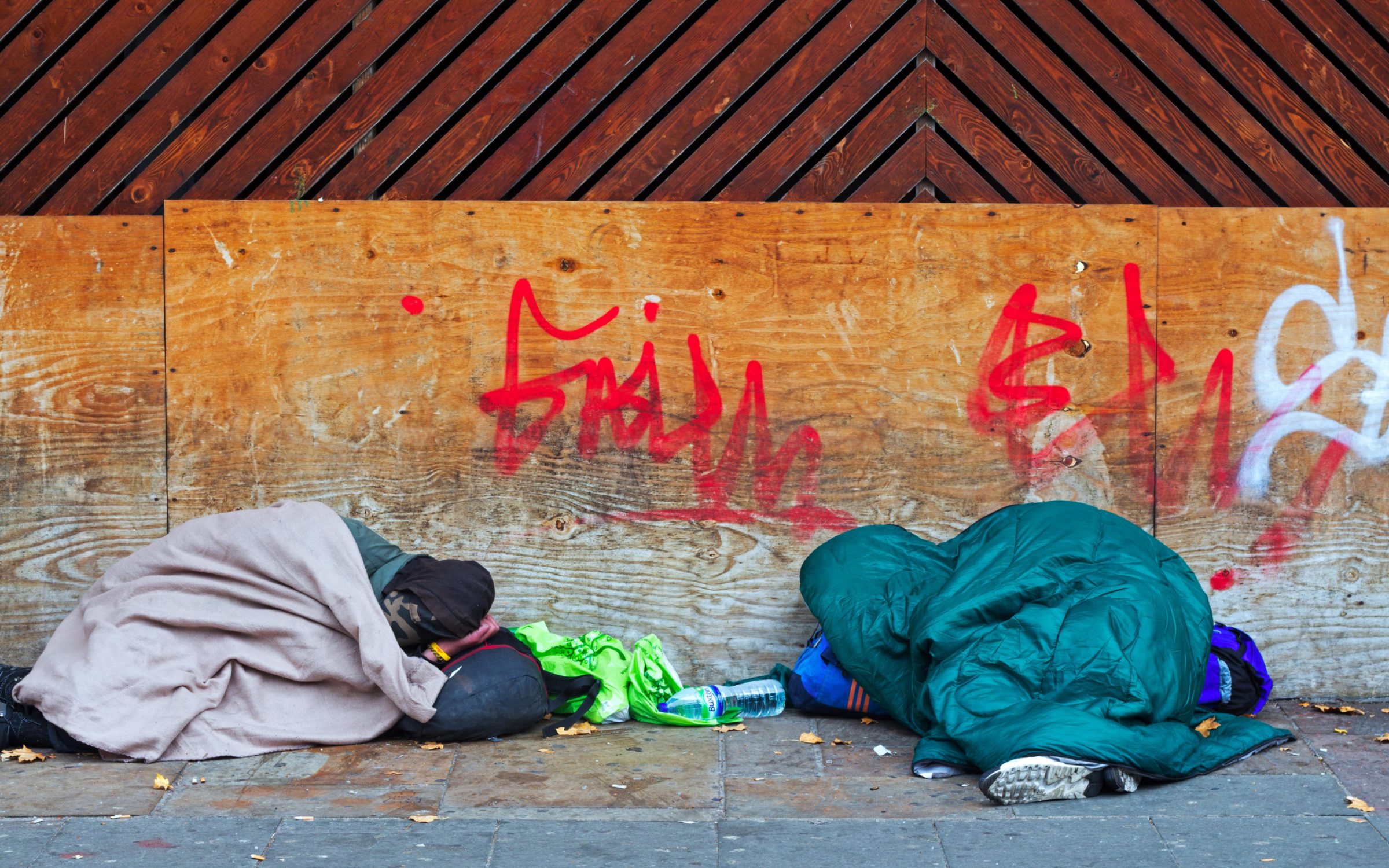
A lot of my direct employment this century has been for charities who work with the homeless. These include those with substance abuse problems, low-level mental health issues or learning difficulties, those who have suffered bereavement, or physical/mental abuse, alongside those who have just fallen on hard times and need help to get back on their feet.
Depending upon your viewpoint, these are either people in need or scroungers. And, to be honest, I have come across both types in my time, but the former by far outweigh the latter. Those with the viewpoint I most disagree with are those who would bundle everyone with any of the problems above in the same category. That's the simplistic view taken by the ignorant who have no empathy or understanding ... or interest in attaining either.
If I had to put it into figures, I'd say that in the last nearly six years, around 10% of those I've dealt with had no interest in dealing with their issues and moving on with their lives (which is the reason they would be housed with us). I would have to say that practically all of these would be those with some form of substance abuse issue.
Then, there are probably around 50% who genuinely need help to free themselves of whatever situation they have found themselves in. Given that help, many will progress, but without it, they are likely to either stagnate or fall into the ranks of the 10% through despair.
The remaining 40% encompass those who, with a minimum of assistance, will progress and get back (or move on) to a stable lifestyle. Most of these just need somewhere to base themselves while they deal with whatever problems have led to their current situation.
As you can imagine, the 40% are generally the easiest to work with. The 50% will be harder to work with, but offer the greatest opportunity for us to be of real assistance and therefore can be the most rewarding. The 10% are the real challenge.
Although the 10% would be the ones most in need of our assistance, they will rarely attend appointments, not take advice, and do nothing more than continue with their self-destructive lifestyles, until such a time as they accumulate enough warnings to be evicted. Then, they go back to the local authority and the process for them begins again.
The 10% will hinder the progress of the others, particularly in HMO properties, when their behaviour impacts on other residents. And this behaviour will cost charities time and money, limiting the amount of both they can spend on those genuinely seeking change.
There is no solution to this problem until such a time as they decide it’s time for them to make a change in their lives, and join the ranks of the 50%. But this happens too infrequently and eviction, imprisonment or premature death become their remaining outcomes. This is simply the way of the world. There will always be some people you can't help at any given time, but that shouldn't be the case forever. In a more balanced society, their ranks could be drastically reduced, then there would be more money and time to assist them properly.
 One thing I can honestly say is there is no better feeling in this world than being able to help someone to help themselves get back on their feet. Because, that's the point ~ just helping someone is easy. Too many people (and some charities) simply throw money at people and problems without understanding that the person they want to help must first want that help. Changes only come from the people themselves ~ we should just be the ones who provide them with the means and guidance (where necessary) to make those changes.
I've seen Class A users kick their habit to such an extent they end up working for groups to help others to do the same. Someone whose self-esteem was so low, they spent little time on their personal hygiene, or keeping their homes tidy ~ becoming settled in their new homes with such an extent of pride, they ask you to take your shoes off when you come in.
That's a much better feeling than just chucking a tenner into a collection pot, or doing a charity run. These are real results ~ helping people to change their lives for the better.
You may not get such a great clap on the back as some Tory donor who gives a few thousand quid to a charity ~ representing perhaps 0.000000001% of their total wealth ~ but, deep down, there'll be a level of personal satisfaction that just can't be bought.
And that's why we do it ...